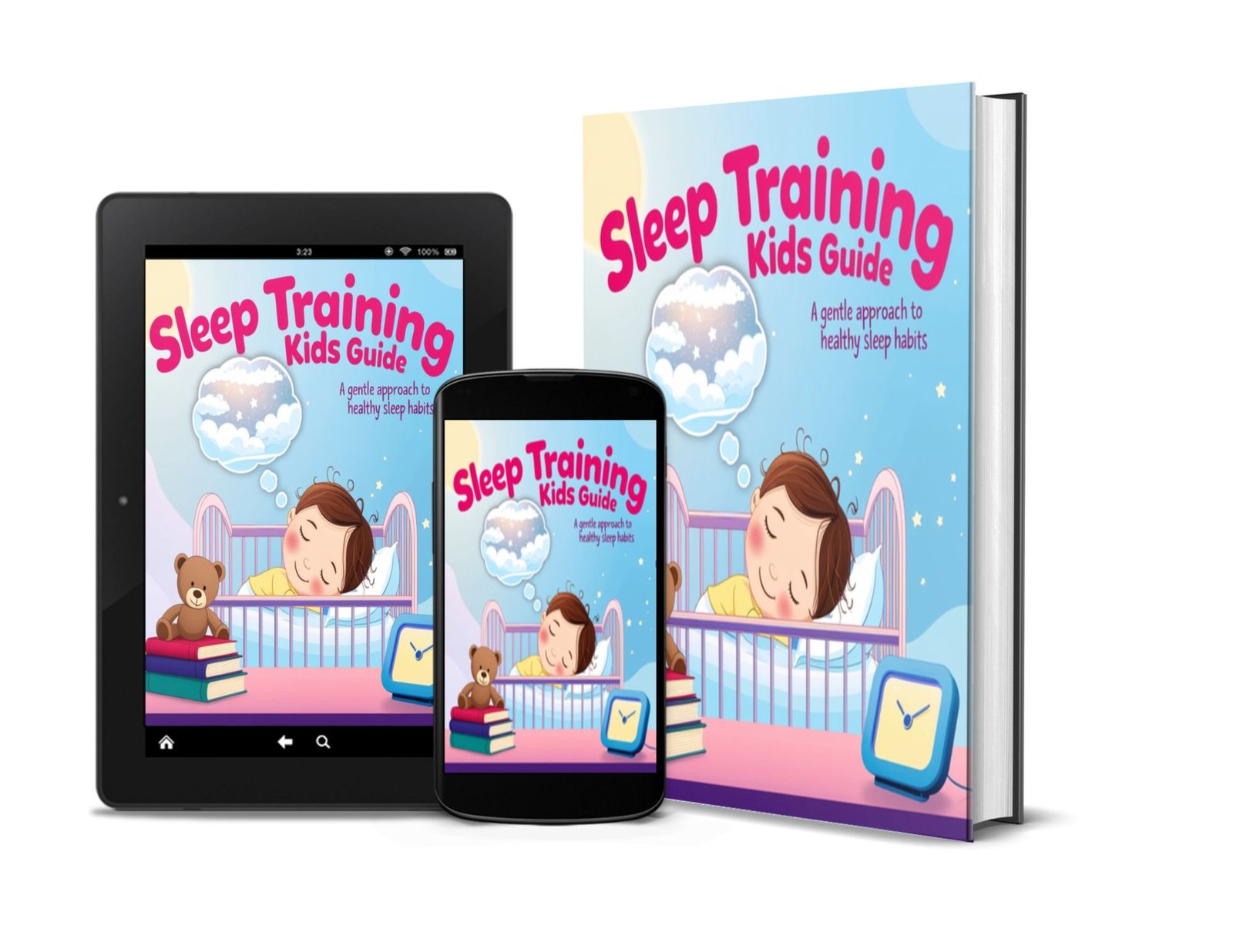
Sleep Training Kids Guide for Exhausted New Parents

Original price was: ₹399.00.Current price is: ₹199.00.

If you’re an exhausted new parent desperately seeking a night of uninterrupted sleep, you’re far from alone. Sleep training kids—especially infants and toddlers—is one of the most debated and misunderstood parenting topics. But here’s the truth: it doesn’t have to be confusing, harsh, or emotionally draining. With the right approach, both you and your little one can enjoy deeper, healthier sleep within weeks (sometimes days).

This comprehensive guide breaks down what sleep training actually means, why it matters, and how to choose the right technique based on your child’s needs. Designed with clarity, science, and practicality in mind, this guide is your go-to resource for restoring peace at bedtime.

What Is Sleep Training & Why Is It Important?

Sleep training is the process of helping your child learn how to fall asleep independently, stay asleep longer, and self-soothe without relying solely on external cues like rocking, nursing, or being held. It does not mean letting your child cry endlessly. Instead, it’s about creating structure and predictable patterns.

Benefits of Effective Sleep Training Include:
  • Improved sleep for both child and parents

  • Better mood & behavior during the day

  • Healthier brain development & cognitive function

  • Reduced nighttime feeding dependence (when age appropriate)

  • Better parental mental health, especially for postpartum moms

Research confirms that babies and toddlers who sleep well tend to show stronger growth, emotional regulation, and learning patterns.

Signs Your Child May Be Ready for Sleep Training

Not all children reach readiness at the same time. Most infants begin showing cues between 4 and 6 months, though toddlers also benefit from structure.

Readiness Signs:

✔ Predictable eating schedule
✔ Ability to self-soothe for short periods
✔ Less reliance on nighttime feeding (4–6 months and up)
✔ Longer stretches of sleep during naps or night
✔ Ability to stay awake longer between naps

If your child is under 4 months, work on gentle sleep shaping rather than formal sleep training.

Size Chart
[rt_custom_block id="4619"]
Different Sleep Training Methods (Choose What Suits Your Parenting Style)

There is no one-size-fits-all solution. The best sleep strategy depends on your child’s temperament, household environment, and parenting philosophy.

1. Ferber Method (Graduated Extinction)

Parents check in at timed intervals. Helps baby learn self-soothing gradually.
Best for: Parents comfortable with minimal crying.

2. Chair Method

Parent sits next to the crib and gradually distances themselves over days.
Best for: Babies who need reassurance & parents who prefer gentle approaches.

3. Pick Up / Put Down

Parent comforts by picking up baby and returning them to crib until they settle.
Best for: Younger babies & attachment-centered parents.

4. Bedtime Fading

Bedtime is adjusted later temporarily, helping child fall asleep faster.
Best for: Kids who resist bedtimes and toddlers with extra energy.

5. Cry It Out (Extinction)

Child is placed down and allowed to fall asleep independently.
Best for: Parents familiar with the method & confident about boundaries.

No method is “better”—only what works best consistently.

How Long Does Sleep Training Take?

On average, families notice improvements within:

  • 2–4 nights for more assertive methods

  • 7–10 nights for gentle or gradual approaches

  • 2–4 weeks for toddlers or stubborn sleep patterns

Consistency is everything. Sleep training fails most often due to inconsistency rather than the method itself.

Select your currency
INR Indian rupee